Drift Into Rest Without Losing Your Evening Spark
Evening tea for sleep does not have to knock you out on the couch. Many of us want to feel relaxed at night, but we still need a little clear energy to read, talk with family, or reset the kitchen before bed. The trick is choosing a cup that calms your body while keeping your mind soft and steady, not wired and buzzing.
That is where gentle green tea, matcha, and calming herbs can work together. A light touch of caffeine with soothing plants can help your body slow down, ease digestion, and quiet stress, while still giving enough focus to finish your night with intention. As days cool and evenings get longer, this kind of tea can feel especially comforting.
In this guide, we will walk through how evening tea works in your body, which ingredients support calm focus, how to pick blends that match your needs, and simple ways to build a cozy ritual that you can keep even on busy fall nights.
Why Evening Energy Feels Different in Fall
Fall evenings have their own mood. The sun sets earlier, the air turns crisp, and yet our to do lists seem to grow. Many people feel sleepy as soon as it gets dark, even while the mind is still running through chores, work, and upcoming holidays.
Daytime energy usually feels bright and sharp. It is pushed by strong light, louder spaces, coffee, and constant movement. Evening energy works better when it is softer and slower. At night, we want:
- Warmth instead of buzz
- Gentle focus instead of hard concentration
- Calm nerves instead of fight or flight
When we shift into fall, heavier meals, cooler air, and changing routines can make this change feel bumpy. You might feel sluggish after dinner but still too keyed up to sleep. A thoughtful evening tea for sleep can help smooth that gap. Warm herbal and green blends can:
- Support digestion after richer fall foods
- Warm cold hands and feet from cooler weather
- Steady mood when stress is higher
- Help you stay lightly productive without pushing past your sleep window
The goal is not to power through the night; it is to land softly.
How Evening Tea for Sleep Can Still Support Alertness
So how can a tea help you feel relaxed yet awake at the same time? A big part of the answer is in the mix of gentle caffeine and calming compounds like L-theanine.
Green tea and matcha naturally carry L-theanine, an amino acid linked with relaxed focus. When you drink a low to moderate amount of caffeine along with L-theanine, the caffeine often feels smoother. Instead of a spike and crash, you can feel clear, steady, and less jittery. That makes green tea and matcha helpful for people who want a little mental brightness at night without a wired feeling.
Then we add in classic sleep-friendly herbs, such as:
- Chamomile, often used to settle the body and soften tension
- Lemon balm, known for its gentle, easing effect on mood
- Passionflower, used to calm a busy mind
- Lavender, loved for its comforting floral scent
These herbs do not act like strong sleep aids. Instead, they help your nervous system loosen its grip. Muscles can unclench, breathing can slow down, and thoughts may feel less sharp around the edges.
Timing also matters. For most people, it can help to sip a low caffeine, functional blend about 2 to 3 hours before bed. That window lets you ride a little wave of calm focus while the warmth, herbs, and green tea guide your body from daytime mode into rest mode. On a cool October evening, that might look like brewing your tea right after dinner, enjoying it while you tidy up, read, or chat, then feeling ready to settle down by the time you reach your pillow.
Choosing the Right Evening Tea Blend
When you are standing in front of your tea shelf, how do you know which blend belongs in your evening routine? Labels can feel confusing, but a few simple checkpoints can help.
- Organic ingredients whenever possible
- Clearly listed herbs, not just "natural flavors"
- Low to moderate caffeine, not a heavy jolt
- Plants that support digestion, light detox, and nervous system balance
Many people like to mix and match. For example, you might:
- Choose a light matcha or green blend earlier in the evening for gentle energy
- Follow dinner with a tea that leans toward digestion and herbs to avoid heaviness
- End the night with a caffeine-free herbal cup if you are extra sensitive
Loose-leaf blends often open up more flavor and aroma. Whole or larger leaf pieces tend to give a cleaner, richer cup when brewed with care. You usually get better extraction of the plant's natural compounds, which can make your evening tea more effective, more fragrant, and simply more enjoyable as nights get longer.
Creating a Cozy Evening Ritual That Actually Works
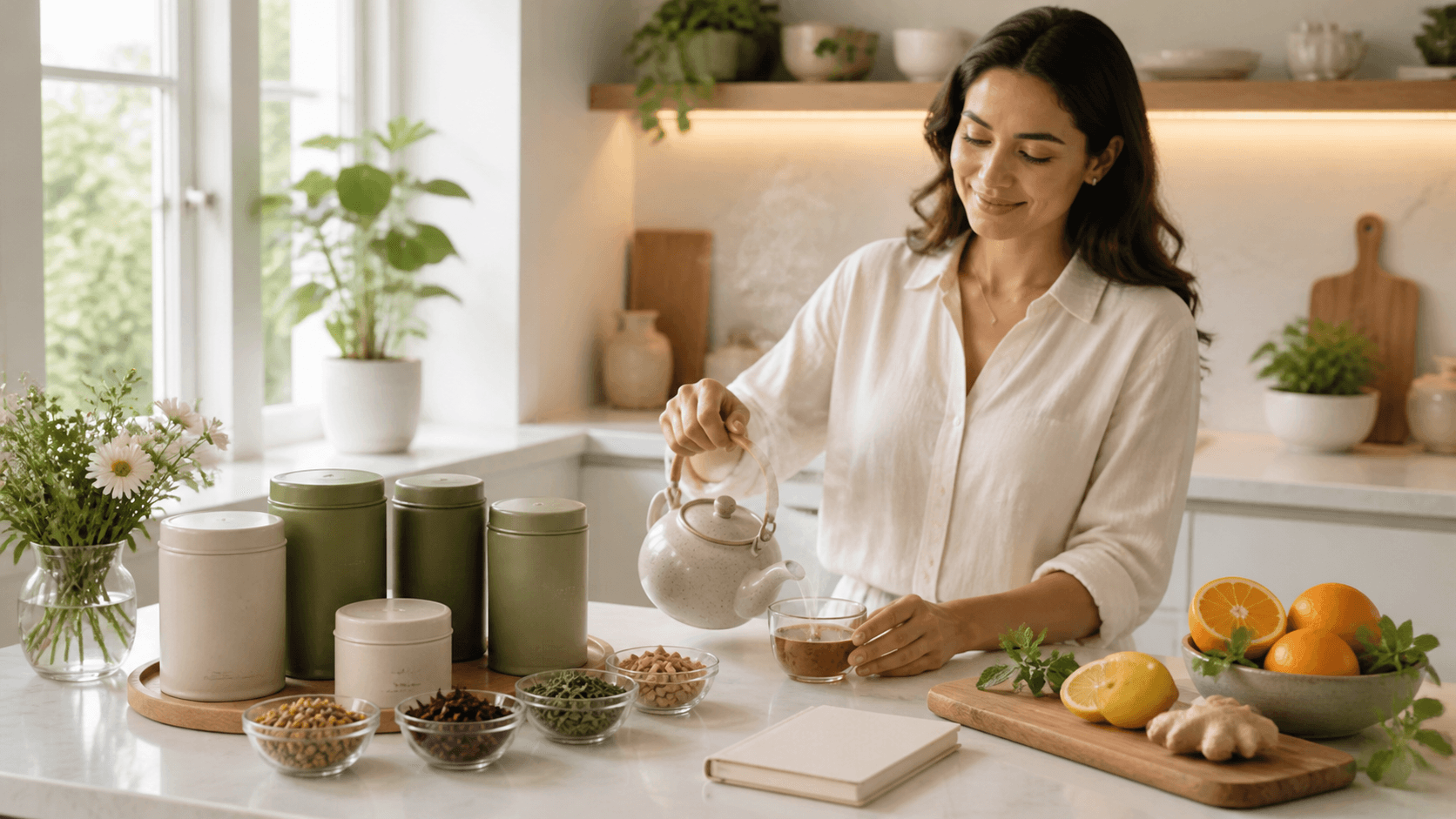
A good evening tea for sleep is not only about what is in your mug, but also how you enjoy it. A simple fall ritual can tell your body, "We are safe, we are slowing down now."
Try a gentle step-by-step flow:
- Turn down bright screens and overhead lights
- Put the kettle on and pick your evening blend
- While it heats, do one small tidy task so you feel more at ease
- Brew your tea and pair it with journaling, stretching, or a short walk outside
Brewing tips can keep your cup smooth, not bitter. For green tea and matcha, slightly cooler water than a full boil often works best. Let boiling water sit for a minute, then pour. Steep green tea for a short time, checking flavor after a couple of minutes, and let herbal blends go a bit longer so the plants can open up.
To support gentle energy and rest, you might add:
- A touch of local honey for sweetness and throat comfort
- A cinnamon stick for warmth and fall flavor
- A splash of oat milk for a creamy, cozy feel
Sip slowly. Feel the heat of the mug in your hands. Take a breath between sips, and notice the herbal scent. These tiny actions tell your nervous system that the busy part of your day is over.
Make Tonight's Cup the Start of Better Sleep
Small changes often build the strongest habits. Swapping a late coffee, energy drink, or glass of wine for an evening tea for sleep can be one of those simple shifts with quiet but real effects. Over several nights, you may notice easier digestion after dinner, fewer jitters before bed, and a smoother slide into rest, even when your fall schedule is full.
At Island Wellness Tea, we focus on organic loose-leaf and matcha blends that are crafted with function and comfort in mind, from digestion to gentle energy to relaxation. Choosing a dedicated evening blend and pairing it with a cozy ritual can give your nights a calmer rhythm, so your mornings feel brighter and more grounded all season long.
Unwind Your Evenings With Calming, Sleep-Supporting Tea
If you are ready to create a relaxing nighttime ritual, our carefully crafted evening tea for sleep is a simple place to start. At Island Wellness Tea, we blend soothing ingredients to help you slow down, release the day, and prepare for more restful nights. Explore our collection to find the blend that fits your routine, and feel free to contact us with any questions about choosing the right tea for your sleep goals.