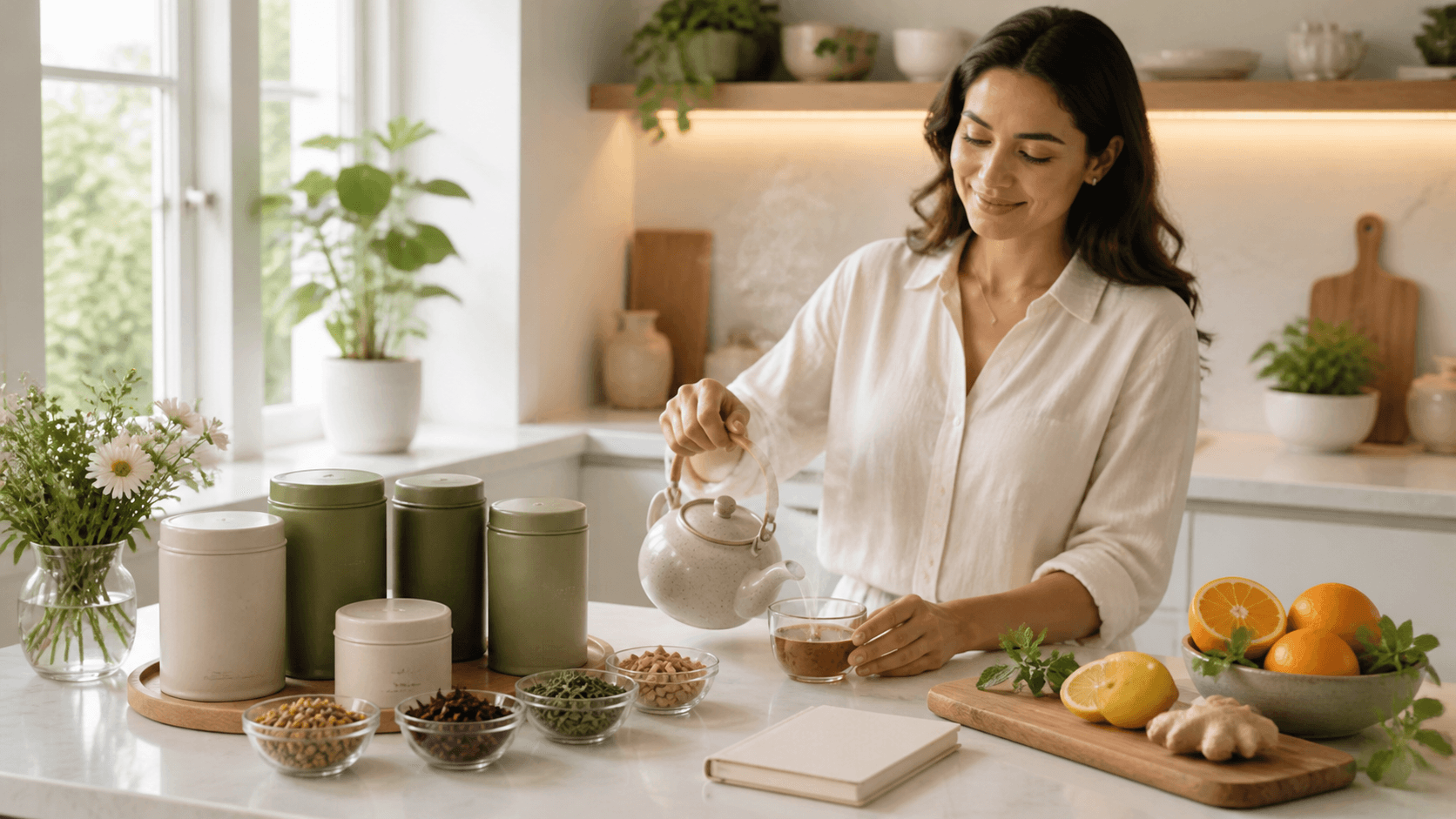
Design a Tea Ritual That Works for Your Real Life
Rushed sips of random tea in between emails or errands do not feel very calming. When we slow down and build a simple wellness tea ritual instead, each cup can actually support digestion, energy, and sleep, not just fill a mug. A personalized ritual does not have to be fancy, but it does need to match what your body needs and how your days really look.
We like to think of it as a three-part match. First, your wellness goal, what you want to feel. Second, your sensitivities, what your body can handle. Third, your schedule, when you can show up for yourself in a steady way. When those three pieces line up, organic wellness tea becomes a daily anchor, not another item on your to-do list.
As early fall rolls in and routines shift after summer, it can feel like a natural reset point. The air cools, meals get a little cozier, and the holidays are not here yet. It is the perfect time to build tea habits that can carry you through the colder months with more comfort and ease.
Clarify Your Wellness Goals Before You Boil Water
Before we talk about blends or teapots, it helps to ask one simple question: what do you want this tea to help with right now? For many people in fall, it comes down to three big themes: digestion, energy, and sleep.
You might notice heavier comfort foods leaving you a bit puffy or sluggish. Or busy school and work days could have you reaching for extra coffee. Shorter days might make it harder to wind down at night. Each of these needs matches well with different plants.
Here are some common goals and supportive herbs:
- Digestion: ginger, peppermint, fennel, gentle bitter roots
- Energy: green tea, matcha, yerba mate, tulsi
- Sleep and calm: chamomile, lemon balm, passionflower, lavender
To keep things simple, we suggest choosing:
- One main goal for fall, like digestion
- One secondary goal, like better sleep or steadier energy
This way, you can focus on a couple of clear feelings you want from your organic wellness tea, instead of trying to fix everything at once.
Match Tea Types to Digestion, Energy, and Sleep
Once your main goal is clear, it is easier to choose the right type of tea for each part of your day.
For digestion, many people enjoy caffeine-free herbal blends with:
- Carminative herbs like peppermint or fennel that can help ease gas
- Warming roots like ginger that feel comforting after rich foods
- Gentle bitters that can support the stomach and may help with fullness
A warm digestive cup after lunch or dinner can become a tiny ritual. Brew your tea, sit for a few minutes, and let your body catch up with your plate.
For energy and focus, matcha and green tea offer a different feel than coffee. Coffee often comes with a quick spike, then a drop. Matcha and many green teas contain L-theanine, an amino acid that is known for calm focus. The result is often a smoother lift that feels clearer and more steady.
You might try:
- A morning matcha to replace or reduce your first coffee
- A mid-morning green tea as a gentle pick-me-up
- Blends that pair green tea with supportive herbs for balanced energy
For sleep and relaxation, timing and caffeine level really matter. Evening blends usually rely on nervine herbs, plants known for relaxing the nervous system. Popular choices include chamomile, lemon balm, skullcap, and lavender. To protect your sleep, it helps to choose low or no caffeine options at night and to stop any higher caffeine teas a few hours before bed.
A pre-bed ritual 60 to 90 minutes before sleep sends your body a clear signal. Fill the kettle, steep a calming blend, dim the lights, and let this be the soft landing at the end of your day.
Honor Your Sensitivities Without Giving up Tea
Many people think they cannot enjoy tea because they are sensitive to caffeine, FODMAPs, or histamines. Instead of giving it up, we can work around those needs.
For caffeine sensitivity, it helps to think in three levels:
- Higher caffeine: matcha, most black teas, some green teas
- Medium: lighter green teas, oolongs, some white teas
- Zero: herbal blends without true tea leaves
You can place them like this: higher caffeine in the morning, medium by early afternoon, and naturally caffeine-free herbs in the evening. Choosing organic wellness tea can also mean fewer extras in the cup, which some people find gentler.
If you have digestive or FODMAP concerns, a few herbs and add-ins may feel too strong. Some people do better limiting chicory, certain dried fruits, or big amounts of inulin-rich roots. Gentler options can include:
- Peppermint
- Ginger
- Rooibos
- Lemon balm
To learn what works for you, keep it simple. Test one new blend at a time and note how you feel for a day or two. A small "tea and tummy" journal for a week can show patterns you might miss in a busy day.
For histamine or allergy awareness, it helps to know that some flowers or spices could be more triggering for some bodies. If that is you, try:
- Blends with fewer ingredients
- Clear labels you can read easily
- Checking with a healthcare provider if you have questions
You do not have to give up tea. You just need the right fit and a little patience with the process.
Fit Your Tea Ritual Into a Busy Fall Schedule
A tea ritual only works if it fits into real life. Fall days can feel packed, so we like to anchor tea to times that already exist in your routine.
Morning activation can be simple. Give yourself 5 to 10 minutes for:
- Heating water
- Whisking matcha or steeping a bright green tea
- Taking a few slow breaths while you wait
- Choosing one word or focus for the day
This short pause sets the tone for more grounded energy instead of rushing from the start.
For a midday reset, try a post-lunch digestive tea or an early afternoon energy-balancing cup. Loose-leaf tea at work or on the go can be easy if you:
- Use an infuser bottle or travel mug with a built-in strainer
- Pre-portion loose-leaf into small tins or pouches at home
- Brew a stronger "concentrate" in the morning, then dilute with hot water later
In the evening, think of tea as your "closing ceremony." A 10 to 15 minute wind-down might include:
- Turning off bright screens
- Preparing a calming herbal blend
- Adding light stretching, breathing, or a few lines of journaling
It does not have to be perfect. Consistency is the real magic, especially once fall schedules get busy.
Start Your Signature Island Wellness Tea Ritual
To bring this all together, remember the simple framework. Pick your main wellness goal. Respect your body's sensitivities. Then anchor the right organic wellness tea into natural points in your day, like morning, midday, and evening.
Choose one small action to start. Maybe it is a morning matcha instead of that second coffee, a gentle digestive cup after dinner, or a quiet herbal blend before bed. At Island Wellness Tea, we focus on organic, functional loose-leaf blends and matcha crafted for digestion, energy, detox, and overall wellness, so you can mix and match to create your own signature ritual set. With a few mindful cups, your daily tea can shift from "just a drink" to a steady act of caring for yourself as the seasons change.
Elevate Your Daily Ritual With Nourishing Organic Tea
Experience how a simple cup of our organic wellness tea can support your focus, calm, and overall balance each day. At Island Wellness Tea, we carefully select and craft our blends so you can feel good about what you are sipping. If you have questions about which tea is right for you or how to incorporate it into your routine, you can contact us for personalized guidance.