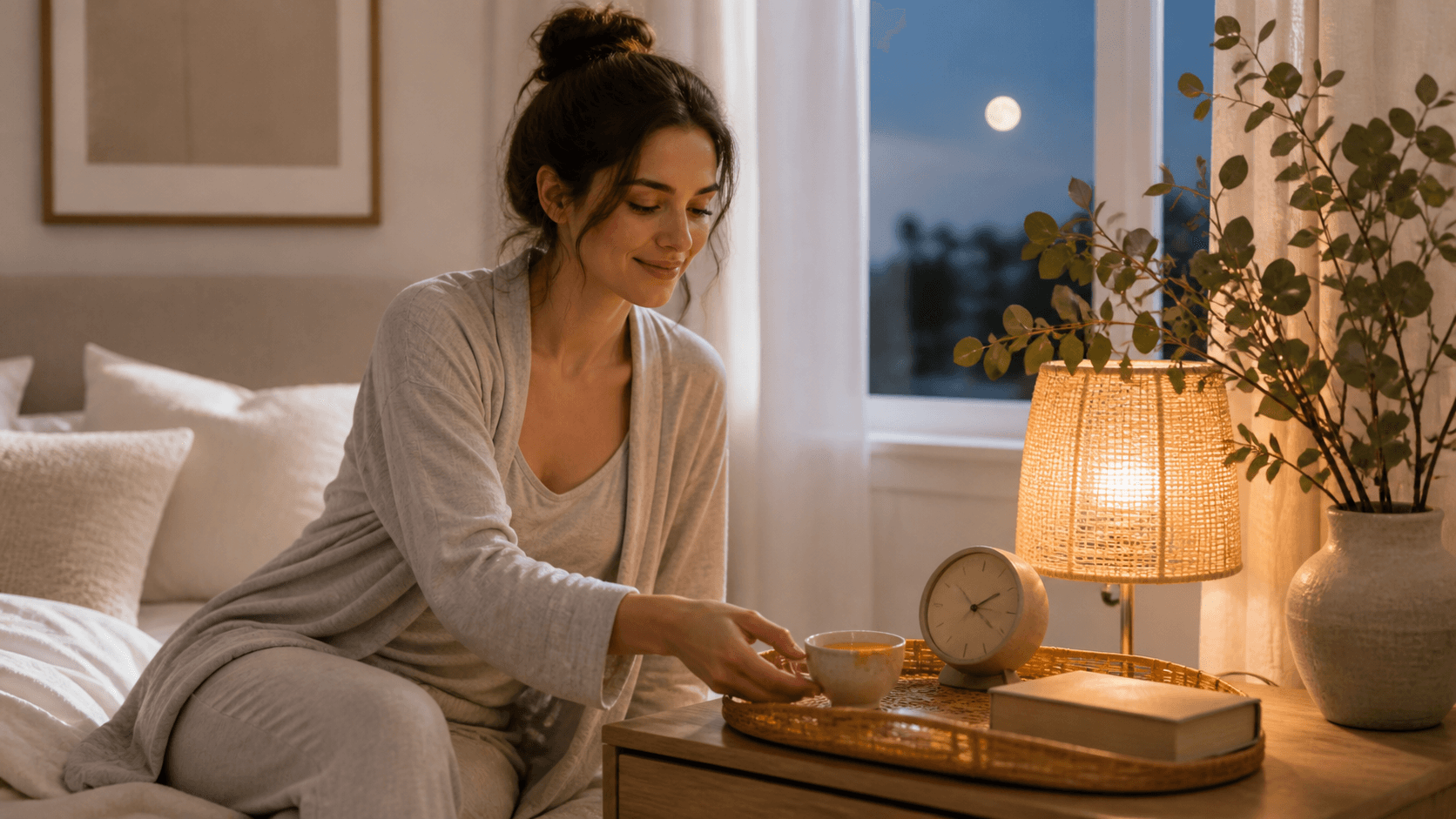
Rethink Your Nighttime Tea so You Wake Up Refreshed
Evening tea for sleep should feel like a gift, not a trap. Many of us love a cozy mug at night, then wake up groggy, puffy, or running to the bathroom at 3 a.m. The problem usually is not the tea itself. It is the timing, the herbs, and how much we drink.
In late August and early fall, when days get shorter and schedules pick up, a calm evening ritual matters even more. Our bodies are shifting with the light and heat, and our routines change with school, work, and family events. In this guide, we will sort out when to drink your tea, how to match sleep herbs with digestion herbs, how much to use, and how to line it all up with your wake time so you can sleep deeply and still feel clear in the morning.
How Tea Timing Shapes Sleep Cycles and Morning Energy
Our brains move through a few simple sleep stages: light sleep as we first drift off, deeper slow sleep when our bodies repair, and REM sleep when we dream. When we wake up often to pee, deal with reflux, or feel wired from late caffeine, those cycles get broken. That is when we get that heavy, foggy feeling the next day.
A helpful rule is the three-hour rule for liquids:
- Try to finish most of your fluids 2.5 to 3 hours before bed
- Keep only a small 6 to 8 ounce cup in the last 60 to 90 minutes
- Sip slowly, do not chug right before you lie down
You can bend this a bit for a focused evening tea for sleep. If the cup is small and the herbs are gentle, finishing 45 to 75 minutes before bed usually works well.
It helps to line up your last full mug with your wake time:
- Wake at 6:00 a.m. last full mug around 8:30 to 9:00 p.m.
- Wake at 7:00 a.m. last full mug around 9:30 to 10:00 p.m.
- Wake at 8:00 a.m. last full mug around 10:00 to 10:30 p.m.
On warm late-summer evenings, we often drink more because we still feel hot and thirsty. Try front-loading water and iced herbal tea earlier in the evening. Then make your bedtime cup smaller and a bit more concentrated, so you still get the benefits without flooding your bladder.
Sleep-Supportive Herbs That Help You Unwind Without Fog
Chamomile, lemon balm, and passionflower are gentle helpers for the nervous system. Each one has its own feel, so you can mix and match.
Chamomile brings soft relaxation and can ease a touchy stomach at the same time. It has mild calming effects that help your body ease into sleep without that "knocked out" feeling. A simple starting dose is:
- 1 to 2 teaspoons of loose-leaf per 8 ounces of hot water
- Steep covered for about 5 to 7 minutes
- Aim for one mug per night
Try to finish your chamomile 45 to 75 minutes before bed so the relaxation peaks as you crawl under the covers.
Lemon balm is great when your mood feels tight and your brain is still in work mode. It can bring calm focus and soften stress without being very sedating. For most people:
- 1 to 1.5 teaspoons per 8 ounces
- Steep 5 to 7 minutes
- Works well paired with chamomile as an evening tea for sleep
This is a nice pick if you feel "tired but wired" and your thoughts spin when you turn off the lights.
Passionflower offers deeper calm when the mind just will not slow down. It supports the same calming messenger, GABA, that helps your brain shift toward rest. Because it is stronger, it is good to stay on the lighter side:
- 0.5 to 1 teaspoon per 8 ounces
- Steep 5 to 10 minutes
- Start with less to avoid morning heaviness
Passionflower is not usually suggested in pregnancy, and if you already use sedatives or antidepressants, it is smart to talk with a practitioner first.
A simple blend idea:
- Chamomile as the base
- A touch of lemon balm
- A small hint of passionflower
Start with one cup about 60 minutes before bed. Keep the cup around 6 to 8 ounces, track how you sleep for a week, and notice your morning energy and clarity.
Digestion Herbs at Night Without Sacrificing Deep Sleep
Many of us need help with digestion at night, especially after rich late-summer grilling or weekend treats. Ginger, fennel, and peppermint can be helpful, but they affect sleep differently than the classic calming herbs.
Ginger brings warmth and movement. It helps when your stomach feels heavy or sluggish, yet it can feel a bit stimulating for some people. For evening use:
- 0.5 to 1 teaspoon per 8 ounces
- Steep 5 to 7 minutes
- Best finished 2 to 3 hours before bed
If you are a sensitive sleeper, use ginger more after dinner and lean on more calming herbs as bedtime gets closer.
Fennel has a gentle sweetness and is known for easing gas and cramping. It tends to be less stimulating and more soothing for the gut. A helpful pattern:
- 1 teaspoon lightly crushed seeds per 8 ounces
- Steep 7 to 10 minutes
- A good post-dinner window is between 7 and 9 p.m. for most schedules
Peppermint feels cool and refreshing, which can be lovely on hot late August nights. It may reduce bloating and that too-full feeling. But it can relax the muscle that keeps stomach acid down, which may make reflux worse if you lie down soon after. For peppermint:
- 1 to 1.5 teaspoons per 8 ounces
- Steep 5 to 7 minutes
- Better 2 to 3 hours before bed, especially if you get heartburn
A good balance if you need both digestion and sleep help is a two-cup rhythm:
- Right after dinner: a stronger digestion blend with ginger, fennel, and peppermint if you tolerate it
- About 60 minutes before bed: a smaller cup focused on chamomile, lemon balm, and a touch of passionflower
Caffeine, Diuretics, and How Late You Can Safely Sip
Caffeine sneaks into more teas than we think. At night, it is safest to skip:
- Green tea and black tea
- Yerba mate
- "Detox" or "energy" blends that include matcha or guarana
Even smaller amounts can shift deep sleep and leave you groggy, so a simple rule is to switch to clear herbal blends after about 3 to 4 p.m.
Some herbs and blends also act like gentle diuretics and can send you to the bathroom more often. Common ones include:
- Dandelion
- Nettle
- Hibiscus
- Some "slim" or "detox" formulas
As a rough guide for diuretic-heavy blends:
- Wake at 6:00 a.m. finish by 7:30 to 8:00 p.m.
- Wake at 7:00 a.m. finish by 8:30 to 9:00 p.m.
If you already wake up to pee, try moving your last cup 30 to 60 minutes earlier for a week and see if that helps.
Portion size and steep time also matter. Keep bedtime cups around 6 to 8 ounces, not a huge 16-ounce mug. In the last 90 minutes before bed:
- Use 1 to 2 teaspoons of loose-leaf per 8 ounces
- Steep most herbs for 5 to 7 minutes
- Passionflower and fennel can go up to 10 minutes if you tolerate them
Longer steeps bring out more strength but can also increase bitterness or a wired feeling, so more is not always better for sleep.
Build Your Personalized Evening Tea Plan Tonight
You can turn all of this into a simple evening rhythm that fits your wake time.
For a 6:00 a.m. wake:
- 6:30 to 7:30 p.m. digestion-forward blend with ginger, fennel, and peppermint if it sits well
- 8:30 to 9:00 p.m. small 6- to 8-ounce cup of a sleep blend with chamomile, lemon balm, and light passionflower
For a 7:00 a.m. wake:
- 7:30 to 8:30 p.m. digestion-focused cup after dinner
- 9:30 to 10:00 p.m. calming evening tea for sleep, again keeping it to a smaller mug
For an 8:00 a.m. wake:
- 8:00 to 9:00 p.m. digestion support if needed, especially after heavier meals
- 10:00 to 10:30 p.m. sleep-supportive blend, finished 45 to 60 minutes before lights out
To see what truly works for you, try a simple 7-night sleep journal. Each night, jot down:
- What time you finished your last sip
- What blend and herbs you used
- What time you went to bed
- How many times you woke up
- How your morning energy felt from 1 (exhausted) to 5 (refreshed)
At Island Wellness Tea, we love helping people turn a basic evening mug into a steady ritual that supports energy, digestion, heart health, detox, and overall wellness. As late summer rolls into fall here on the island, a calm, well-timed evening tea for sleep can make your mornings feel clearer, lighter, and ready for whatever the season brings.
Drift Into Deeper Sleep With a Calming Evening Ritual
If you are ready to trade restless nights for restorative rest, we invite you to explore our curated evening tea for sleep blends crafted to help you unwind, relax, and reset. At Island Wellness Tea, we carefully select ingredients that support a gentle transition from a busy day into a peaceful night. If you have questions about which blend fits your routine or wellness goals, you can contact us for personalized guidance.