Soothe Your Stomach and Sleep Better Tonight
A calm stomach makes it much easier to fall asleep and stay asleep. When reflux, bloating, or IBS symptoms spike at night, even a soft pillow and dark room do not help much. The tea you drink in the evening can either ease that discomfort or quietly stir it up.
As schedules shift in late summer and early fall, stress often climbs and mealtimes creep later. That is when many people notice more heartburn, gas, or gurgling right before bed. A gentle evening tea for sleep can support both your mind and your digestion, if it is built with the right herbs and brewed the right way.
When we say a tea is tummy-friendly, we mean it is caffeine-free, low in FODMAPs, lower acid, and made with clean, organic ingredients. In this guide, we will walk through which herbs tend to be easier on sensitive stomachs, which ones to treat with care, how to brew to reduce reflux triggers, and how to build a simple, soothing night routine around your cup.
Why Sensitive Stomachs Need Special Bedtime Teas
At night, digestion naturally slows down. That slower pace is helpful for rest, but it also means anything heavy, spicy, or gas-forming can sit longer in the stomach and gut. If the lower esophageal sphincter is relaxed, or the belly is very full, acid and steam can move upward and keep you awake.
Some common tea ingredients can make this worse for sensitive people. These include:
- High FODMAP roots like chicory or large amounts of inulin
- Strong spice blends with hot peppers or intense clove
- Hidden caffeine from green tea, black tea, or yerba mate
For some, even very minty blends can encourage reflux, because mint may relax the valve at the top of the stomach. That does not happen to everyone, but if you notice more heartburn after mint tea, it is worth paying attention.
Low-FODMAP, low-acid herbs are gentler. They tend to create less fermentation in the gut, so less gas, less pressure, and less bloating. When the belly feels calmer, it is often easier to fall asleep and stay asleep without waking from discomfort.
Sleep and gut health are closely linked. Poor sleep can leave the digestive system more reactive the next day. Then the next night feels rough again. Choosing calming bedtime teas is one simple way to start breaking that cycle.
Best Low-FODMAP, Low-Acid Herbs for Nighttime Relief
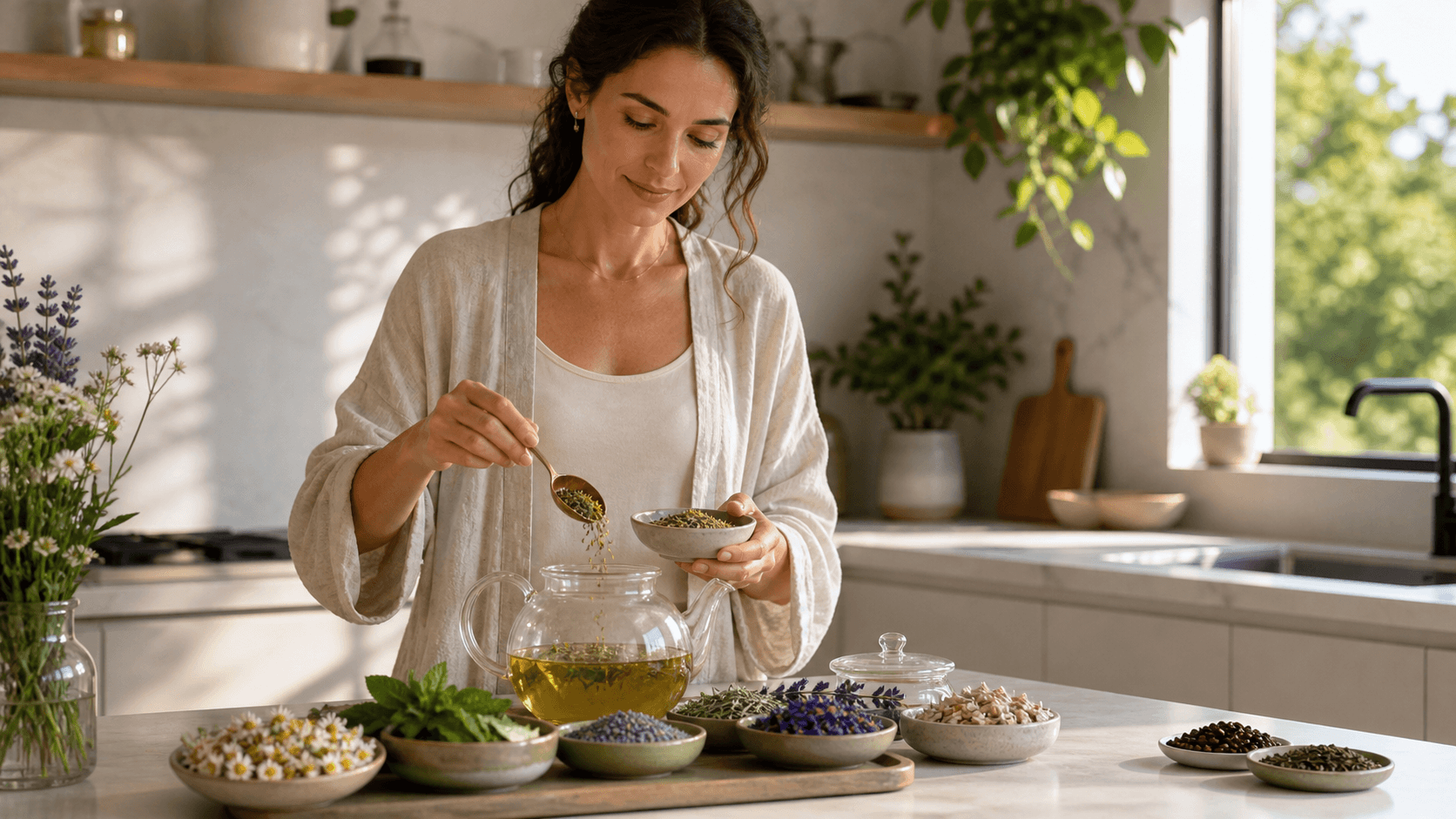
A good evening tea for sleep with a sensitive stomach starts with the right plants. Here are some gentle, widely loved options.
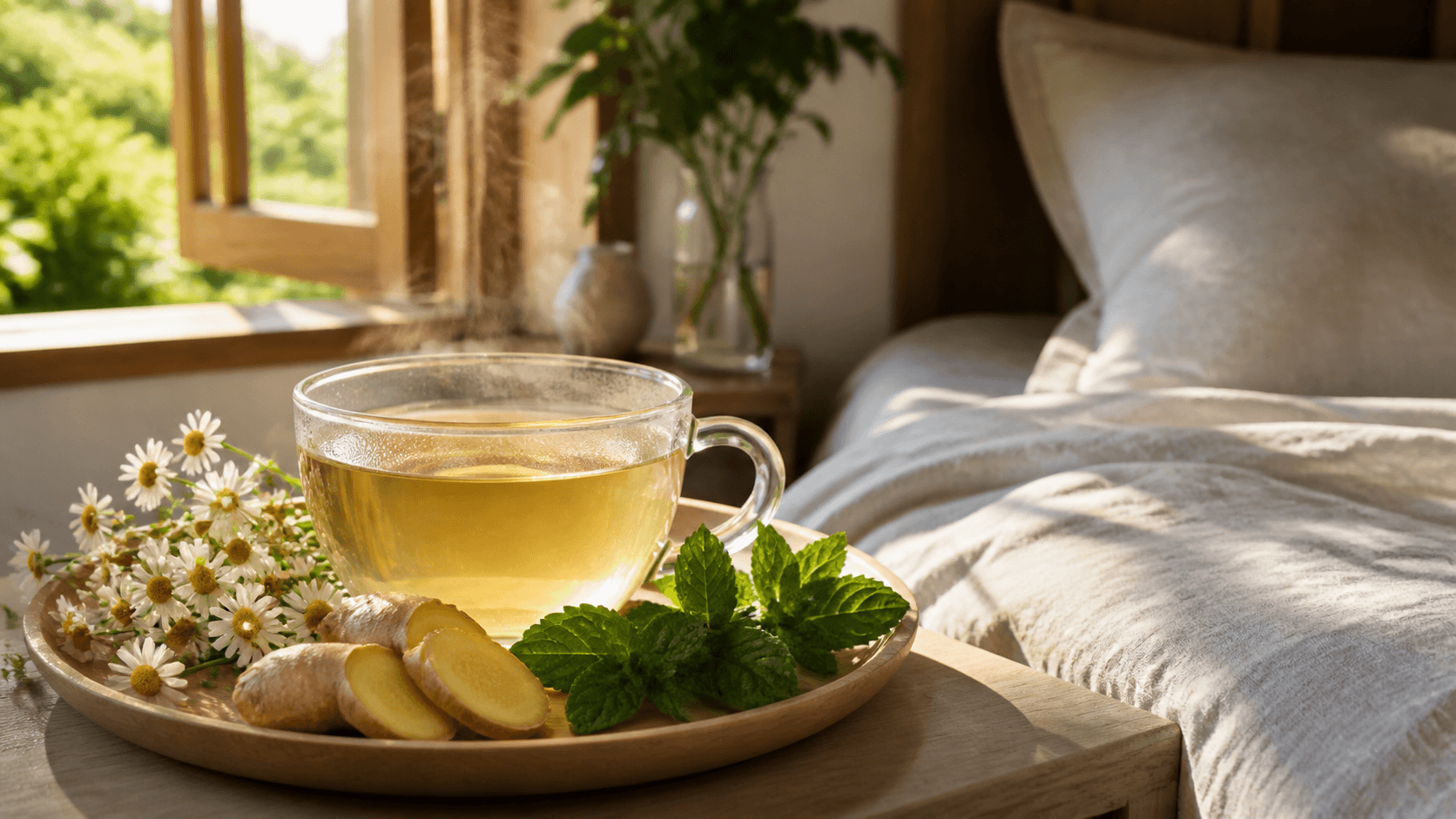
- Chamomile: Known for its soft, apple-like taste, it can help relax both the mind and the digestive tract.
- Lemon balm: Bright but mild, often used to ease nervous tension and support a settled stomach.
- Lavender: Light floral notes that can support relaxation, especially when combined with other herbs.
- Rooibos: Naturally caffeine-free, low in tannins and low in acid, with a smooth, slightly sweet taste.
- Passionflower: Often used for quieting a racing mind as bedtime gets close.
- Ginger, in modest amounts: Can help ease nausea and gas, but very strong ginger may feel hot for some people.
Most people with sensitive stomachs do well with these in gentle blends, especially when the herbs are organic and free of added flavor chemicals. The goal is to relax the nervous system and ease the digestive tract at the same time.
There are also herbs and spices to use with care:
- Peppermint and spearmint can be soothing for gas but may trigger reflux in some.
- Licorice root can feel soothing to the throat and stomach, but people with blood pressure concerns are usually told to be cautious.
- Heavy spices like black pepper or lots of cinnamon close to bedtime may feel too stimulating.
At Island Wellness Tea, we like to combine herbs such as chamomile, lemon balm, rooibos, and small amounts of ginger into blends that support digestion while also helping the body shift into evening mode. The idea is a cup that feels warm and comforting, not intense or harsh.
Brewing Tips to Prevent Reflux, Gas, and Bloating
Even the best herbs can feel wrong if the tea is brewed in a way that is too strong for your system. Small tweaks in temperature, time, and timing make a big difference.
Gentle brewing tips:
- Use water that is hot, but not furiously boiling, especially for delicate flowers like chamomile and lavender.
- Start with a shorter steep time, about 3 to 5 minutes, and see how your body responds.
- Cover your mug while it steeps to keep calming aromatics from drifting away.
Portion size and timing matter too. A giant tumbler of tea right before lying flat can almost guarantee a midnight bathroom trip or reflux. Instead, try:
- A smaller mug, sipped slowly.
- Finishing your tea at least 45 to 60 minutes before you lie down.
- Avoiding heavy or greasy snacks with the tea. Light is usually better at night.
If the tea tastes too strong or feels heavy in your stomach, dilute it with more hot water. Some people do better starting with a mild brew, then slowly making it a little stronger over several nights as they see how their body reacts.
Pair your tea with simple lifestyle habits that support digestion at night: elevate the head of the bed slightly, avoid tight waistbands, and choose a few minutes of gentle breathing or stretching instead of scrolling on a bright screen.
Building a Gentle Evening Tea Ritual for Better Sleep
When you have a sensitive stomach, the whole evening flow matters, not just the last sip. A steady, simple routine can send clear signals to your gut and brain that it is time to settle.
A sample routine might look like this:
- Eat a light dinner a few hours before bedtime.
- Start to lower lights and reduce screen time as evening goes on.
- Take a warm shower to relax muscles and ease tension.
- Brew a cup of calming, low-FODMAP, caffeine-free tea.
As you sip, make it a small ritual. Keep the lights low. Play soft music or white noise if that feels relaxing. Hold the warm mug near your belly for a moment and notice the heat soaking in. Take slow breaths between sips, letting your exhale be a little longer than your inhale.
A short sleep and digestion journal can help you spot patterns. You might jot down:
- What blend you drank and how strong it was
- What time you finished your tea
- Any reflux, gas, or bloating you felt
- How long it took to fall asleep and how rested you felt in the morning
Over time, this makes it easier to see which herbs, steep times, and habits give you the calmest nights. During busy transition seasons, a familiar Island Wellness Tea style blend can become a comforting anchor in that nightly flow.
Choose Your Perfect Evening Tea and Sleep on It
A gut-friendly evening tea for sleep is simple at its core. It is caffeine-free, based on low-FODMAP, low-acid herbs, brewed gently, and enjoyed at a calm pace well before your head hits the pillow. The details, like exact herbs and strength, are personal and worth exploring.
Try focusing on one new bedtime blend at a time for a few nights, adjusting steep time and amount until it feels right. Take a quick look at your current tea shelf and shift higher acid, strongly caffeinated, or very spicy blends to earlier in the day. Give the evening hours to blends that support digestion and relaxation.
Tonight, brew a small mug of gentle, low-FODMAP herbal tea, follow a short relaxing ritual, and notice how your stomach and sleep feel tomorrow morning. Use what you learn as a guide, and keep shaping a bedtime tea routine that feels kind to both your gut and your rest.
Drift Into Deeper Sleep With a Calming Evening Ritual
If you are ready to trade restless nights for truly restorative rest, let us help you create a soothing wind-down routine that works. Explore our curated evening tea for sleep blends and discover which gentle botanicals help you relax most easily. At Island Wellness Tea, we carefully craft each blend so you can slow down, sip with intention, and signal to your body that it is time to rest. If you have questions about which tea to start with, feel free to contact us for personalized guidance.